

The road from Marrakech to the Sahara is one of the great drives of the world, and a Morocco desert camper route lets you do it at your own pace. In about ten days you cross the High Atlas over the Tizi n’Tichka pass, visit the kasbah of Aït Ben Haddou, follow the road of a thousand kasbahs to the Dades and Todra gorges, and wake up next to the golden dunes of Erg Chebbi near Merzouga.
This guide gives you a realistic itinerary with driving times, where to stop, what to watch out for on the road and our own tips from many trips south. It is a route framework, not a fixed schedule: stay longer where you like it.
The route at a glance
Marrakech → Tizi n’Tichka → Aït Ben Haddou → Ouarzazate & Skoura → Dades Gorge → Todra Gorge → Merzouga → Draa or Tinghir route → Ouarzazate → Marrakech
A loop of roughly 1,300 km from Marrakech. Starting from our free pick-up in Casablanca adds about three hours of motorway each way; delivery to Marrakech is available for an additional fee.
Recommended duration
8 days: possible from Marrakech, with several long driving days.
10 days: our recommended duration, with a rest day in Merzouga.
12–14 days: start in Casablanca and add the Draa valley or Zagora.
Best time to travel: October to April. Desert days are warm and sunny, but nights can drop close to freezing between December and February, so bring warm layers. From June to August temperatures in the desert often exceed 40°C, and we do not recommend this route then. More details in our guide to the best time to visit Morocco with a camper.
Approximate driving times
- Casablanca → Marrakech: about 2.5 to 3 hours (motorway)
- Marrakech → Aït Ben Haddou: about 4 hours via the Tizi n’Tichka pass
- Aït Ben Haddou → Ouarzazate: about 40 minutes
- Ouarzazate → Skoura: about 45 minutes
- Skoura → Dades Gorge: about 2 hours
- Dades Gorge → Todra Gorge: about 1.5 hours
- Todra Gorge → Merzouga: about 3 to 3.5 hours
- Merzouga → Ouarzazate: about 5.5 to 6 hours (split it with a night on the way)
- Ouarzazate → Marrakech: about 4 hours
Why choose this Morocco desert camper route?
Organised tours rush from Marrakech to the dunes and back in three days. With your own camper you see the same places, but you also get the quiet mornings, the empty roads and the freedom to stop wherever the light is beautiful. Along the way you can:
- cross the High Atlas on one of the most spectacular mountain roads in North Africa;
- explore the UNESCO-listed ksar of Aït Ben Haddou;
- walk through palm groves and kasbahs in Skoura;
- drive the famous hairpin bends of the Dades Gorge;
- walk between the 300-metre walls of the Todra Gorge;
- watch the sunset and sunrise over the dunes of Erg Chebbi;
- fall asleep under one of the clearest night skies you will ever see.
Days 1–2: Marrakech
Take a day or two in Marrakech before heading over the mountains. Stock up on groceries and water, get used to the camper, and enjoy the city. Our southern Morocco campervan route has tips on where to stay and how to explore Marrakech by e-bike.
Day 3: Over the Tizi n’Tichka pass to Aït Ben Haddou
Leave Marrakech in the morning on the N9. The road climbs steadily into the High Atlas and reaches the Tizi n’Tichka pass at about 2,260 metres. It is fully paved and has been widened in recent years, but it is long and winding: stop often, use lower gears on the descent and let faster traffic pass.
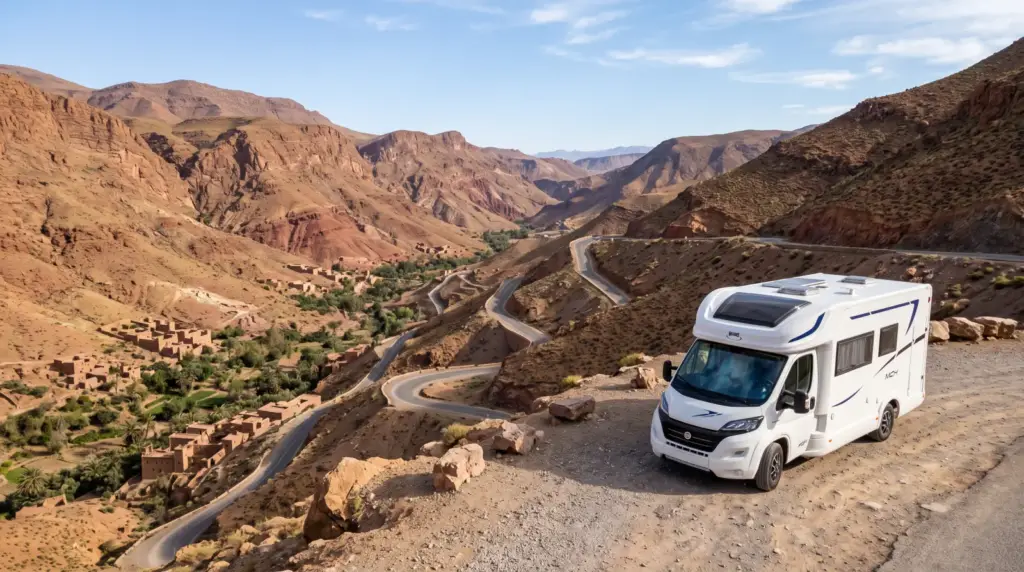
On the southern side, turn off towards Aït Ben Haddou, the fortified earthen village that has featured in countless films. Several auberges near the river welcome campers. Cross the river in the late afternoon and climb to the top of the ksar for the view at sunset.
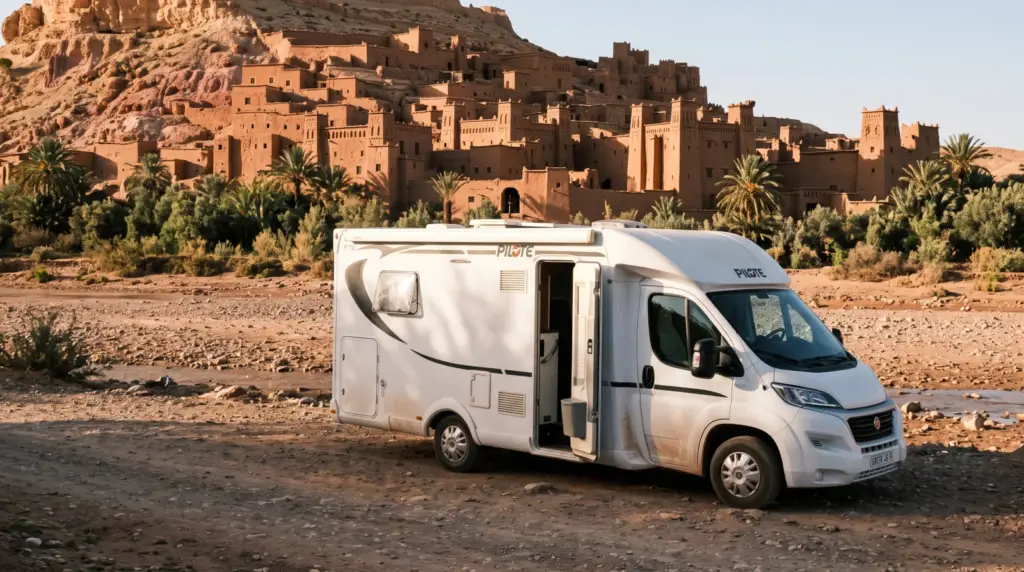
Day 4: Ouarzazate and the palm groves of Skoura
Drive to Ouarzazate, the gateway to the desert. Visit the Taourirt kasbah or one of the film studios, and fill up your water and diesel tanks. In the afternoon, continue to Skoura, a large palm grove dotted with old kasbahs. It is a peaceful place to spend the night and to walk among the palms in the evening.
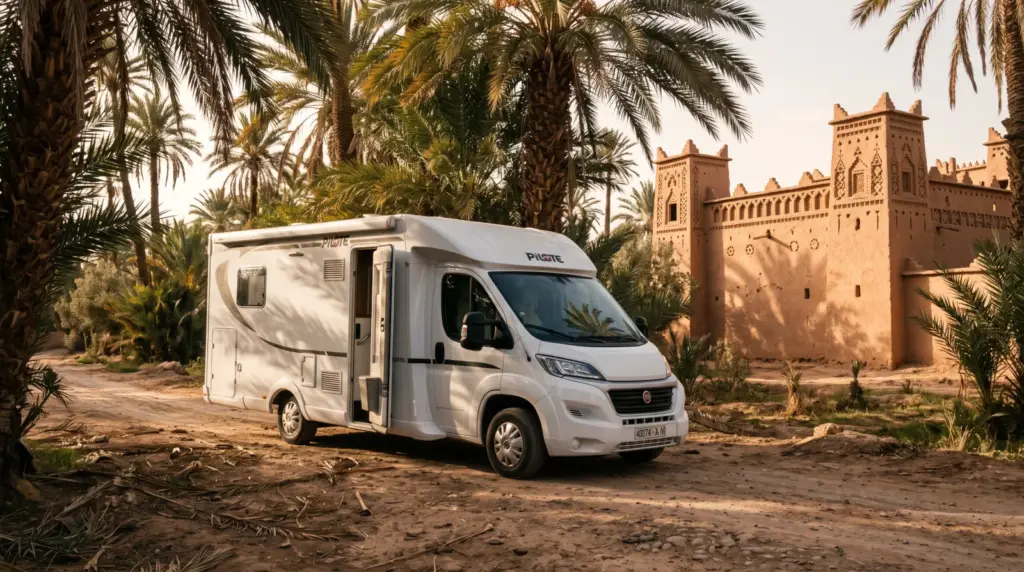
Day 5: The Dades Gorge
Continue east through the Valley of Roses to Boumalne Dades and turn north into the Dades Gorge. The road follows the river past strange rock formations to the famous zigzag of hairpin bends. Park at one of the viewpoints at the top, have lunch with the view, and spend the night at one of the riverside campsites or auberges in the gorge.
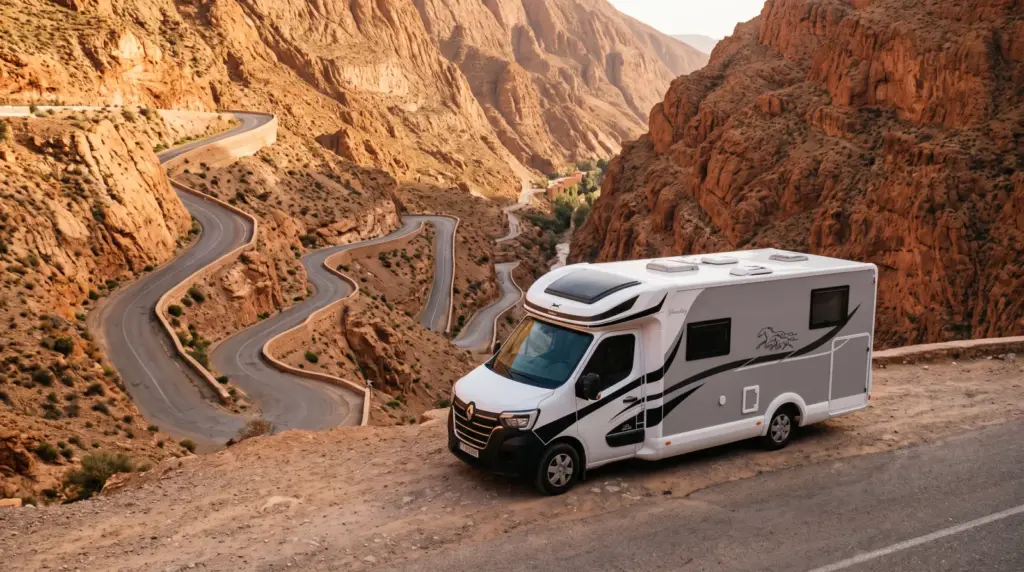
Day 6: The Todra Gorge
A short drive brings you to Tinghir and the Todra Gorge, where the canyon narrows to a few metres between walls up to 300 metres high. Walk through the narrowest part early in the morning, when it is quiet and cool. Campsites at the entrance of the gorge and in the Tinghir palm grove make a good overnight stop.
Days 7–8: Merzouga and the Erg Chebbi dunes
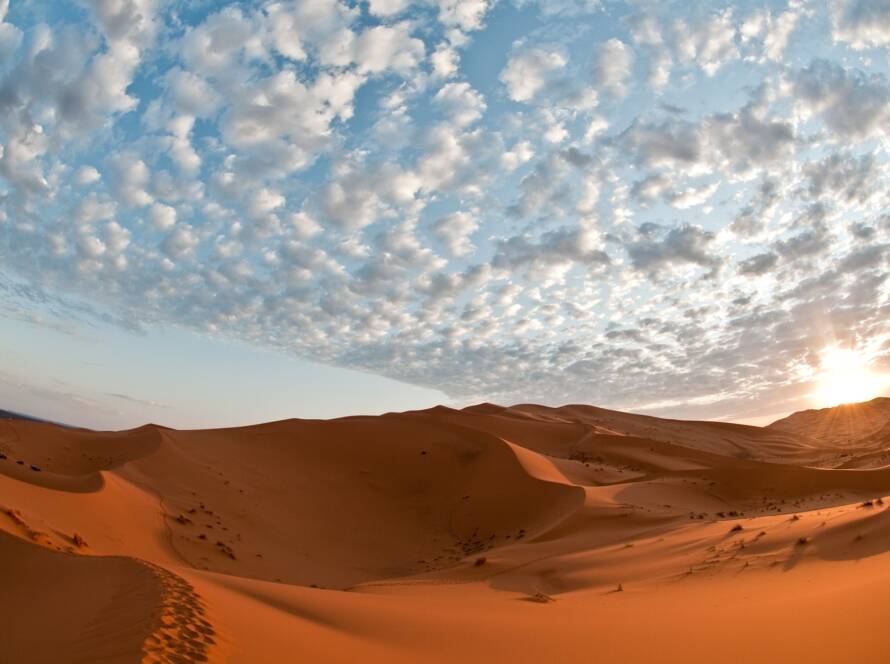
From Tinghir, the road leads via Tinejdad and Erfoud to Merzouga. Suddenly the orange dunes of Erg Chebbi rise from the flat stony desert. Many auberges along the edge of the dunes have camper pitches with water, electricity and showers, and the dunes start right behind them.
Plan at least two nights here. Watch the sunset from the top of a dune, book a camel ride or a night in a desert camp, and visit the village of Khamlia, known for its Gnawa music. One important rule: never drive the camper onto the sand. Our campers are two-wheel drive, and soft sand is for camels and 4x4s only.
Days 9–10: Back to Marrakech
Return the way you came via Tinghir and Ouarzazate, or take the quieter southern road via Rissani, Alnif and N’Kob into the Draa valley at Agdz. Either way, split the drive with a night in the Ouarzazate area before crossing the Tizi n’Tichka back to Marrakech. On the southern route, fill up with diesel in Rissani or Erfoud, as fuel stations are further apart.
Practical tips for the desert route
- Avoid driving after dark: animals, unlit vehicles and pedestrians are common on rural roads.
- Fill up with diesel and drinking water whenever you pass a larger town.
- In winter, check the weather before crossing the Tizi n’Tichka; snow can occasionally close the pass for a few hours.
- Bring warm clothes and a sleeping layer for cold desert nights between November and February.
- Fine sand gets everywhere: keep windows and roof vents closed when it is windy.
- Keep your documents ready for police checkpoints and greet officers politely; they are routine.
Want more inspiration? Head north on our northern Morocco camper route to Chefchaouen and Fes, or read the 10 things to know before touring Morocco by campervan.
Frequently asked questions
How many days do I need to drive from Marrakech to Merzouga and back?
We recommend 10 days. It is possible in 7 or 8, but the drives are long and you will have little time to enjoy the gorges and the dunes.
Can I drive a normal camper to Merzouga?
Yes. The roads to Merzouga are paved all the way. Just do not drive onto the dunes or soft sand; park at an auberge or campsite at the edge of the desert.
Is the Tizi n’Tichka pass difficult with a camper?
It is a long and winding mountain road, but it is paved and used every day by buses and trucks. Drive calmly, take breaks and avoid it in bad winter weather.
Where can I sleep with a camper near the desert?
Most travellers stay at auberges and campsites along the edge of Erg Chebbi, in the Dades and Todra gorges and around Ouarzazate. They usually offer water, showers and electricity. Read our FAQs for more about wild camping in Morocco.
When is the best time to visit the Sahara with a camper?
October to April. Spring and autumn are ideal; winter days are sunny but nights are cold, and summer is too hot for comfortable travel.
Ready for your desert road trip?
Our campers come fully equipped with unlimited kilometres, free pick-up in Casablanca and personal support via WhatsApp during your trip. Pick your camper, or message us and we will help you plan the perfect desert route.